
Wines from António Maçanita
A Laranja MecânicaA Touriga Vai Nua
Arinto dos Açores
Branco de Talha
Branco dos Villões
Branco Vulcânico
Canada do Monte
Caracol dos Profetas
Caracol Fazendas da Areia
Carta da Fitapreta
Crosta Calcária dos Profetas
Freshly Squeezed Rosé
Isabella a Proibida
Listrão dos Profetas
O Ancestral Branco
O Iluminista Tinto
Os Paulistas Chão dos Eremitas
Rosé dos Villões
Rosé Vulcânico
Sabor(z)inho
Thomas Jefferson 10 years
Tinta Carvalha Chão dos Eremitas
Tinta Negra dos Villões
Tinta Negra Vale de São Vicente
Tinto de Castelão
Tinto Vulcânico
Verdelho o Original
Vinha Centenária Branco
Vinha dos Aards
Vinha dos Utras Branco
Vinho da Corda dos Profetas
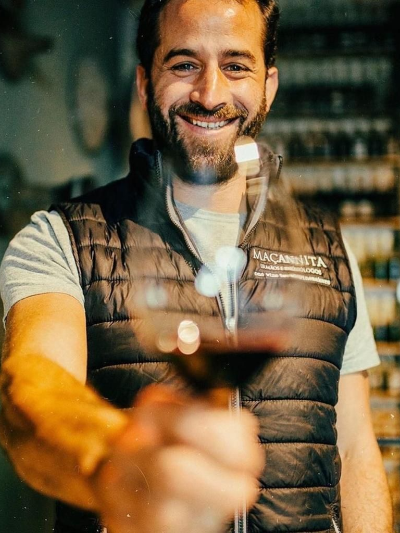
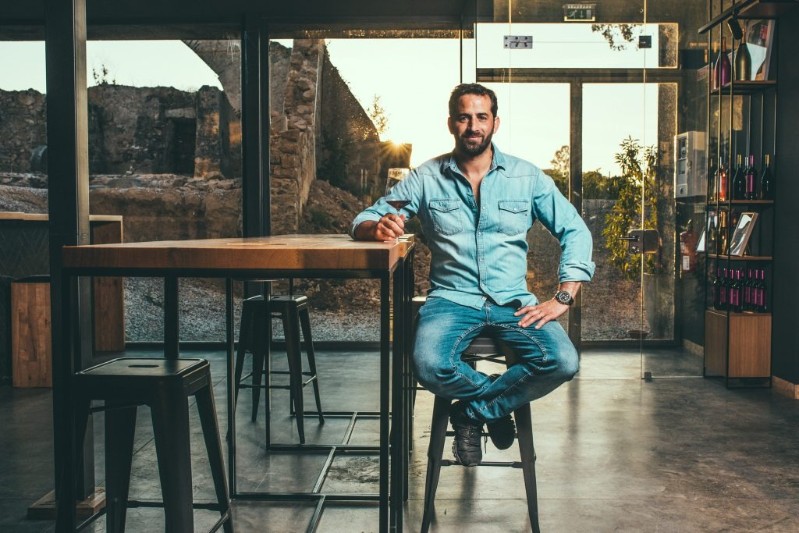
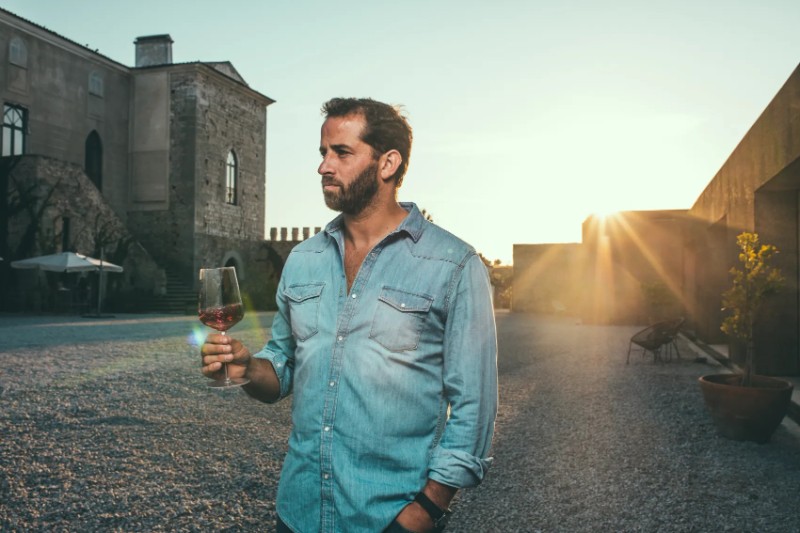
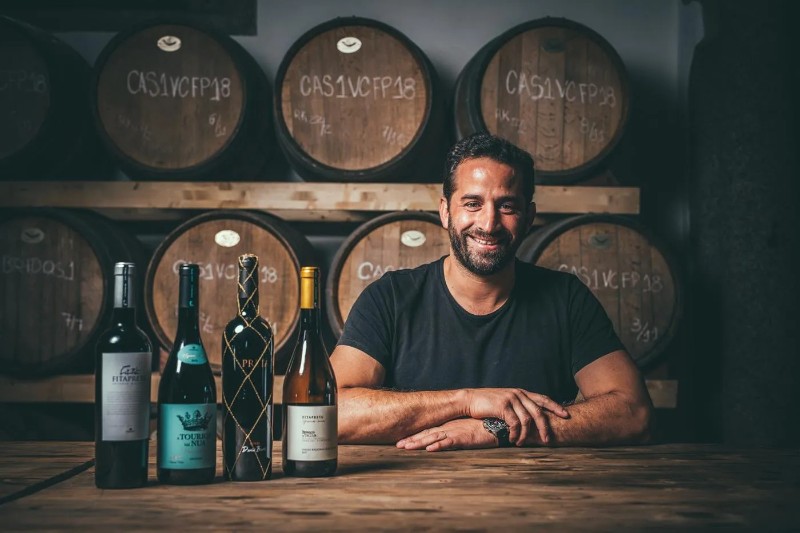
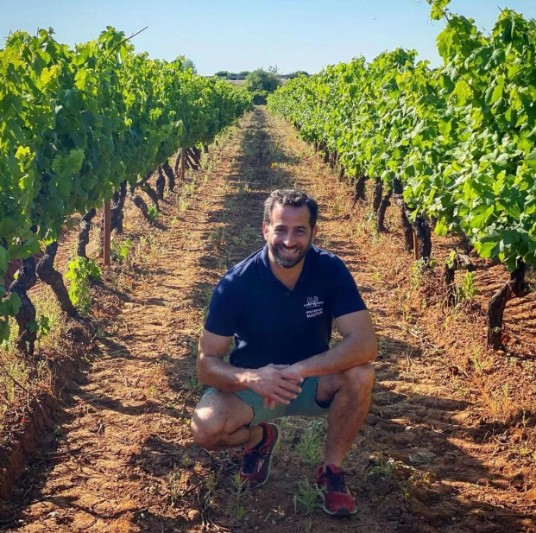
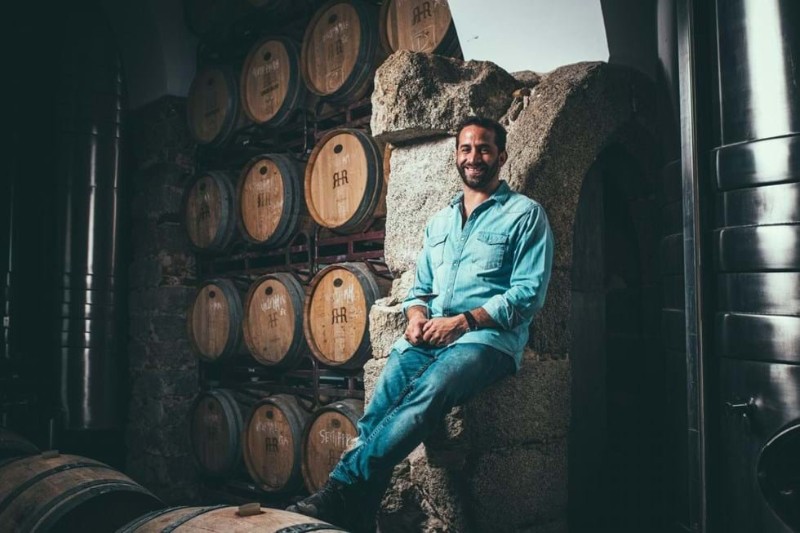
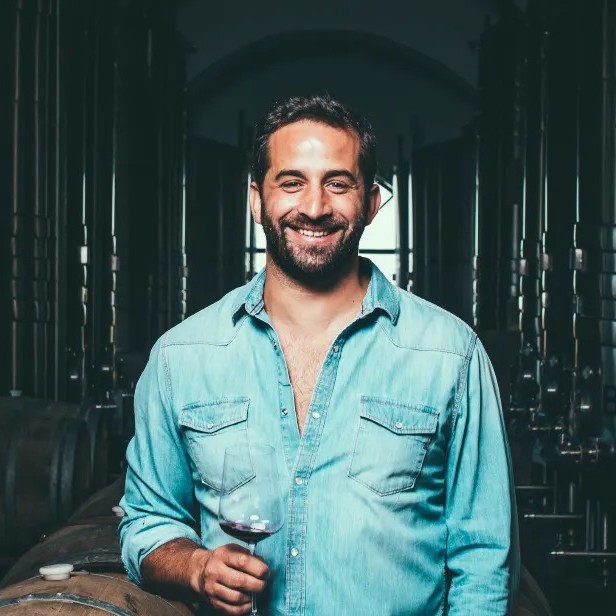
António Maçanita
Fitapreta, Azores Wine Company, Companhia de Vinhos dos Profetas e Villões & Maçanita Vinhos
Alentejo, Azores, Madeira & Douro, Portugal
Winemaker, consultant, researcher, provocateur. António Maçanita is one of Portugal’s most influential modern winemakers, working across the country’s most distinctive regions, including Alentejo, the Azores, the Douro, and Madeira. In less than two decades, he has helped reshape Portugal’s wine landscape, earning recognition as “Winemaker of the Year,” “Most Unique Winemaker,” and “Winemaker of the Generation” for his work from 2006 to 2016. His approach bridges time and place, honoring tradition while applying a rigorously modern, scientific lens.
Maçanita is known for pushing boundaries while reviving what history left behind. His “firsts” include Portugal’s first blanc de noirs wine, its first amphora-aged wine, and the first commercial bottlings of hybrid varieties in the Azores. Equally defining is his work restoring historic vineyards, sites, and grape varieties, from building a winery in Alentejo around a 14th-century monastery to reintroducing dozens of long-forgotten cultivars. His philosophy centers on respect for nature, heritage without sentimentality, curiosity without fear of failure, and constant exploration.
Born in Lisbon to an Azorean-Alentejano family, António was exposed to wine early, foot-treading grapes as a child during trips to the Azores. He studied agronomy in Lisbon and trained internationally at estates including Château Lynch-Bages, Merryvale and Rudd in Napa, and d’Arenberg in Australia. Returning home, he focused his work on Portugal’s own viticultural, geological, and cultural identity, becoming a leading voice of the country’s contemporary wine movement.
In 2004, he founded Fitapreta Vinhos in Alentejo with David Booth, bringing a fine-wine mindset to a historically rustic region. Today, Fitapreta ranks among Alentejo’s leading estates. A decade later, he co-founded Azores Wine Company on Pico, driven by the revival of Terrantez do Pico, helping reposition Azorean wines internationally, including a top score from Wine Spectator in 2016.
That island-focused vision later expanded to Madeira. In 2021, alongside Madeiran restaurateur Nuno Faria, Maçanita launched Companhia de Vinhos dos Profetas e Villões, inspired by Porto Santo’s low-growing vines and the playful rivalry between Madeirans (“Villões”) and Porto Santans (“Profetas”). The project reflects Maçanita’s broader legacy of revival, including work with Negra Mole in the Algarve and rare Alentejo varieties such as Tinta Carvalha and Alicante Branco, while reinforcing his commitment to bold, place-driven island wines.
António divides his time between Alentejo, the Azores, Madeira, and the regions where he consults. Family remains central to his work. His mother is a constant presence at Fitapreta, he collaborates with his sister Joana in the Douro, and his wife, Alexandra Leroy Maçanita, oversees hospitality at Fitapreta. Together, they embody a family-led vision that continues to define the new Portugal in wine.
IN THE VINEYARD
António Maçanita manages to achieve balance in extremes; his two primary winemaking areas could not be more polarized! On cold and wet Pico Island, vines struggle to escape the volcano’s rain shadow grasping for sunlight along the island’s edge, where 500-year-old volcanic stone walls (known as currais) are all that stand between the plants and dangerously salty Atlantic winds. Making wine on Pico, according to António, is a constant “battle between the sea and the mountain” and he is one of very few who have succeeded in achieving ripeness in red grapes here. At the other extreme, he must handle the sun-blasted vineyards of Alentejo, where rough, cheap red wines made for bulk consumption had long been the local standard—a far cry from Fitapreta’s nuanced bottlings. The intense climate has forced António to seek out more delicate local red varieties for balance and has even inspired his use of thermal mapping via drone to locate pockets of cooler weather ideal for his textured white wines.
Maçanita farms 72 hectares across north-central Alentejo, planted at altitudes of up to 1,500 feet above sea level. These vineyards are in multiple subregions (Borba, Évora, Vimieiro, Redondo), all dominated by schist soils. One of the Fitapreta calling cards is its modern twists on indigenous varieties, like Antão Vaz, Arinto, Roupeiro, Touriga Nacional, Aragonês, Trincadeira, Alicante Bouschet, Alfrocheiro, Castelão, and Boal de Alicante. The estate’s 50-year-old "Chão dos Ermitas" vineyard serves as a nursery for many forgotten grape varieties that once dominated Alentejo, such as Tinta Carvalha, Moreto, Alicante Branco, and Tamarez or Trincadeira das Pratas.
In the Azores, António and his partners own 100 hectares of extremely low-yield, walled vineyards (primarily on Pico) and purchase fruit from an additional 30 hectares across the archipelago, from regions such as DOP Graciosa, São Miguel, and others. These sites range from sea level to 500 meters in altitude, with the oldest vines averaging up to 80 years. It is from this stony volcanic terroir that according to António, “these singular, saline wines are born, or should we say, erupt.” Here, indigenous varieties are the focus: Arinto dos Açores, Verdelho, and Terrantez do Pico are the primary white grapes, with Boal (Malvasia Fina), Fernão Pires, and others. For the reds, António cultivates Saborinho, Rufete, Bastardo, Malvarisco, Castelão, Touriga Nacional, Aragonês, and forbidden hybrid Isabela, along with small amounts of Syrah and Merlot.
IN THE CELLAR
Despite the major differences across his winegrowing regions, Maçanita maintains a consistent winemaking strategy. For reds, António aims to showcase the varietal’s fruit and aromatic profile as influenced by the local climate, from the hedonistic aromas of unoaked Touriga Naçional and Baga grown in sunny Alentejo, to the briny, electric perfume of the prohibited red hybrid variety Isabela, on Pico. He achieves this with gentle, gravity-fed winemaking, and insists upon whole cluster and native yeast fermentation, with careful attention to the fermentation temperatures so that brightness and secondary aromas remain intact. Maçanita uses a combination of stainless steel, new, second, and third use French oak barrels in his winemaking, determined by the needs of the varieties and blends.
For white wines, Maçanita allows for up to a day or more of skin contact to add texture and incorporate some native yeast, helping along the fermentation. Total spontaneous fermentation is not always possible in the Azores wines but is used at Fitapreta for whites. In the Azores, he uses horizontal stainless-steel tanks to maximize the wine’s contact with the lees, adding some roundness to the searingly acidic palate. He also uses traditional vertical tanks and used barrels of various sizes for white wines. At Fitapreta, his use of the talha, or amphora, has shown the benefit of micro-oxygenation on the local white grape varieties, making them aromatic and easy to drink after only a short aging period. Regardless of the site, all Maçanita’s white wines go through malolactic fermentation.
António Maçanita’s wineries serve as hospitality centers, research laboratories, and reflections of their local culture. The Azores Wine Company winery on Pico—just completed in 2021—is a modern building with copious glass walls, allowing for unobstructed views of its dramatic maritime surroundings. There is a tasting room and restaurant dedicated to showing off not only the regional grapes but the local seafood and dairy specialties; these amenities require a much larger staff than the area’s typical cooperative winery, and Azores Wine Company employs over 30 locals. At Fitapreta in Alentejo (a large, rural province susceptible to losing its brightest young people to bigger cities) António has a lively team of 50, and his modern building with subterranean fermentation tanks, local cork flooring, and classrooms, receives many visitors each year. The refurbished chapel has enough space for enormous wine dinners—and great acoustics for a little singing after.
APPELLATIONS & WINE
António Maçanita currently makes wine in at least six distinct regions across Portugal (Alentejo, Algarve, Azores, Douro, Lisbon, Porto Santo/Madeira; not all of these are exported) with over 75 wines produced under his own umbrella and another 30+ made as a consultant. His exposure to nearly the entire country’s winemaking needs has made him one of the preeminent experts on not only his own wines, but all of Portugal’s.
Despite some uphill battles in his career and skepticism from more established old-guard winemakers, António Maçanita’s very first wine, Preta 2004, won the Alentejo Trophy at the International Wine Challenge. Now known as Preta Cuvée David Booth, it regularly receives top marks from Robert Parker’s Wine Advocate, Wine Enthusiast, Decanter, and others. Wines such as Palpite Branco and Tinto and the single-vineyard Chão das Ermitas bottlings reflect the seriousness of Fitapreta’s undertaking and have earned numerous 90+ scores from Decanter, Wine Advocate, Wine Enthusiast, Wine Spectator, and others, while more eclectic bottlings like A Laranja Mecânica highlight the experimental spirit that drew António to winemaking in the first place.
At Azores Wine Company, the Volcanic Series (Branco, Rosé, and Tinto Vulcânico) has become emblematic of the region, sourced primarily from Pico with select fruit from other islands. The Rare Grapes Collection, including single-varietal wines such as Verdelho O Original, underscores António’s focus on understanding historic varieties to secure their future relevance. In Madeira, his work continues through Companhia de Vinhos dos Profetas e Villões, a Porto Santo–focused project that channels the island’s low-growing vines, extreme conditions, and local identity into precise, character-driven wines, extending his island philosophy to one of Portugal’s most singular terroirs.
Today, reviewers regularly use terms like “accomplished,” “impressive,” and note that "every time you look up, something interesting is happening [from Maçanita].” In 2018, António Maçanita won both the Winemaker of the Year title from Revista dos Vinhos and the 2018 Uniqueness Award from Grandes Escolhas magazine, and in the same year, Revista do Vinhos considered Azores Wine Company a Breakout Producer. In 2016, Azores Wine Company and its three partners won the Project of the Year and two years later, Revista de Vinhos Magazine chose Vinha Centenária, from Azores Wine Company, as one of the Best Wines of Portugal in 2018. in 2021 Fitapreta was named Producer of the Year by Revista de Vinhos.
With his extensive portfolio and so much global and local attention, it is hard to believe that António Maçanita has only recently turned 40 years old. In his short but impactful career, he has managed to blaze a trail forward not only for himself, but for many generations to come. In this way, he reflects the most exciting facet of contemporary Portuguese wine: it is having its moment now, and the sky is the limit for its potential. Unlike Europe’s more famous and established winemaking areas, history is not for reading in books, but being made by winemakers like António right now, for the entire world to see—and taste.
SUSTAINABILITY
Maçanita describes his strategy for sustainability as one that exists to guarantee not only the environmental healthiness of “today,” but for generations to come. He takes the long view, favoring the French translation of “durability” over the term sustainability, noting that “we make sure things can last … our vineyards, our soil, our family, our communities, our wines, our business.” Fitapreta is a proud member of Alentejo’s 178-point sustainability program, and takes many steps to reduce its environmental impact, from creating new habitats for pollinators, dry farming, reducing emissions by exchanging mechanical equipment for sheep for cover crop maintenance, and collaborating with the local community and research institutions. Fitapreta and Azores Wine Company employ dedicated full-time vineyard teams, allowing for the minimal use of chemicals (unless absolutely necessary) and careful, gentle hand harvesting.
Let’s stay in touch
“We’ll keep you in the loop about future events, winemaker tastings, recipes, new releases, travel guides and other occasional updates.”